Saturday, 23 July 2011

Vincisgrassi vs lasagne al forno and chef Antonio Nebbia

Lasagne al forno are an Italian dish made of layers of egg pasta, tomato sauce with beef meat and besciamella sauce. Historians suggest that its origin dates back to the Roman Empire, and Cicero was very fond of it.


Vincisgrassi are a younger variant of lasagne that sprang out of poverty and ingenium in the region Le Marche, Central Italy. The main difference with respect to lasagne is the use of poultry meat, including offals, rather than beef, and the addition of Marsala wine or vino cotto to the pasta dough.

The chef Antonio Nebbia from Macerata offers to future generations a unique recipe of the dish in his recipe book "Il Cuoco maceratese". This is a milestone of Italian, and more broadly Mediterranean cuisine, as well as of food habits in the 19th century.

Why were vincisgrassi not simply called pasta al forno alla Marchigiana? They owe their name to Joseph-Niklas von Windisch-Graetz . He was a general in the Austrian Army who freed Ancona from the siege by the French Army in 1799 ca, although for a very short period of time before the French Army took the city back.

Wine tip: Rosso Conero and Lacrima di Morro d'Alba ;
Dessert tip: Cicerchiata .

Thursday, 21 July 2011

A welcoming courtyard in Pinerolo along stage 17 in the Tour de France

Stage 17 in the Tour de France has been a very intense one, with riders crossing the Alps from France to Italy and reaching a summit at 2000m (picture on the left).

After three hard climbs uphill, the final sprint was downhill to eventually reach the end of the stage in Pinerolo (photo below).


Curiously, two riders: Jonathan Hivert and the holder of the maillot jaune Thomas Voeckler stepped out of the road on a difficult curve and entered the couryard of a house by the side of the road: perhaps to say hi to a relative or accepting the very welcoming hospitality by locals!?

An amateurial video seems to suggest that the owner of the house felt glad not to have parked the car in the courtyard that day!

Movie tip (from Repubblica.it): Check out a famous Italian b-series movie in which the main character and his colleagues engage in a clumsily ironic bike race in Pinerolo!

Wednesday, 6 July 2011

A walk from from Vetta d'Italia to Finis Terrae and beyond


1600km from perennial snow on the Austrian border to Mediterranean sea life in Southern Sicily is how far Italy stretches North to South. A similarly stark change in landscape is what you get if you travel from the North Western border, looking onto France, to South Eastern one, looking onto Albania and Greece.

The geographical differences, and some of the socio-economic ones that spillover fro such different lands have been nicely collated in a photo album by Nat Geo

Headphone tips to complement the landscapes: Lou Dalfin , Agricantus , Abies Alba and Taranta Power

Friday, 1 July 2011

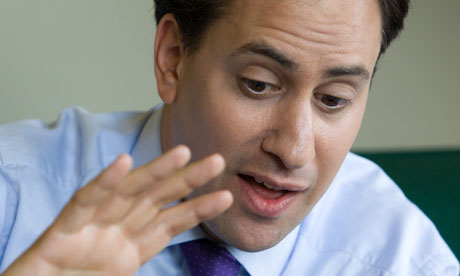
New Labour leader or CD album!?

Ed Milliband the Labour party leader in the UK has recently been interviewed about the strikes by public sector employees. In his attempt to revive the little harsh opposition by the Labour party lately and prepare it for the next elections in 2014, or earlier, he discussed in the interview a broad number of issues, ranging from economics to party politics and social challenges for the country.


Thanks to the editing of the interview, what may have gone unnoticed in his preparation for the interview is the low level of details that Ed was prepared to give on a number of issues, which a disappointed interviewer could not help disclosing.

This may suggest how hard it is for a politician to competently span in no time across Philosophy, Politics and Economics (not by chance a popular degree in Social Science in the UK), and the harder the younger and less experienced the politician is. On the other hand, not all interviews by a journalist, who may repeatedly interview a person over time, can be as abrasive as sandpaper!

Hat tip for both Ed and the disappointed journalist for future interviews: The Best of Jeremy Paxman !

Thursday, 23 June 2011

Britain Bike Week (18-26th Jun 2011): Everyday cycling for everyone!


What an "every-rich" motto for the Bike week initiative in the UK, which is held yearly in June all over the country!

While zipping to work this morning I bumped into a stall advertising the initiative in bike-friendly Fitzroy Sq. By the stall were an employee from Camden council and an officer by the Met Police.

In about 5' they kindly stamped on my bike frame an "anti-theft" unique ID with permanent ink, that the police officer ensured it has been tested against the latest bike thieves' "entrepreneurial ideas" and technology. My bike details, as well as my contact details, are now in a database by the Met police.
My dear old Pinncle also has a flashy sticker flagging thieves that my bike is tagged, and not worth their effort.


Most impressive of all the police officer confidently knows stat.s about the share of bike stolen out of the total no. of bikes in town, which the police adjusts for underreporting to the police w.r.t. all bikes that are stolen in town. This share is in the range 20-30%.

Two hat tips:
1) Go and get your bike tagged! You can search the closest stall by postcode in http://www.bikeweek.org.uk/

2) Listen to London while you read top 10 bike maintenance tips !

Tuesday, 14 June 2011

Top 100 books review & non winners' curse for economists

The Guardian has just published online an list of the top 100 non-fiction books, which its staff has compiled. While the books in it are thoroughly intriguing, and worth taking a sabbatical in one's job to read them, economics, the "dismal science" as Paul Krugman puts it in a book, has no entry.

To fill this gap, I thought I'd think about some titles, and email them to the Guardian, curiosly waiting for their reply.

The Theory of Moral Sentiments by Adam Smith

The Great Crash, 1929 by John K. Galbraith

Freakonomics: A Rogue Economist Explores the Hidden Side of Everything by Steven Levitt and Stephen J. Dubner

The Accidental Theorist: And Other Dispatches from the Dismal Science by Paul Krugman

I bet that I have forgotten some, hence hat tips are welcome!

Thursday, 9 June 2011

Screws and bolts: the Italian prime minister and the opposition

In the latest issue of The Economist, an article is about the Italian prime minister Silvio Berlusconi . It starts with the following title: The man who screwed an entire country .


The articles describes the reasons why the prime minister is deemed unfit for office in Italy, an opinion that The Economist has put forward since 2001, and its consequences for the country. In 2003 the magazine also posed the prime minister 6 questions about the determinants of his past achievements as entrepreneur. Such question offer useful information to also assess why the entrepreneur turned to politics.


While the analysis in all such articles is accurate, its focus is 100% on the government coalition, rather than also on the opposition, thus omitting information that helps to explain the long survival in office of the controversial Italian entrepreneur, who firstly ran for elections in 1994.

In short, the reason why the centre-left parties or coalition party have only managed to win over Berlusconi, and the centre-right coalition party,  twice in elections is the lack of pragmatic focus on the ingredients to win democratic elections. One needs 50.1% of consensus by voters to buy a party and its candidate prime minister the right to rule a country. Sounds rather easy, hey!

However, adverse selection of member of parliaments and party leaders, the tendency by politicians to preserve (in)direct control over the public administration and firms in (little) competitive markets, and shifting the balance towards "political engineering", rather a balance of this and also grassroots politics, leave too little time for a busy candidate standing against Silvio Berlusconi in elections to also focus on counting the votes that one would get in exchange for pragmatic ideas that are spelled out simply, and tend to buy votes!

This problem leads to a double consequence for both end of the political spectrum in Italy: the centre-left coalition struggles to find a candidate that can deliver in elections, and instead focuses on little constructive criticism of the opponents. As per the centre-right coalition, it heavily depends on the entrepreneur-politician Silvio Berlusconi. Voters in the country face a similar problem to an agency problem in their support to either of party in a simplified 2-party system, and in delegating his preferences over what (not) do to in a country.

Voters are principals in their rights as citizens to delegate to a politician, who may or may not put all the effort in winning elections. Easier shortcuts than winning 50.1% of votes include quarrelling with colleagues over abstract ideas and plans (see Peoples' Front of Judea in Monty Python's Life of Brian !) The delegation problem is made even more difficult by the fact that the tasks that a politician carries out to win votes and elections are multidimensional in nature: competing with other politicians, campaigning by talking to households, firms or lobbyists, media coverage, considering alternative jobs to politics, fending corruption attempts, etc.  A way to describe this in words is that delegation is multidimensional in nature (see this link for a similar example that applies to managers in the private sector). This makes the game sound less easy, hey!